After a stroke, St. Augustine man still making a splash
Senior swimmer on way to nationals thanks to quick action in seeking stroke treatment.
Autor del artículo: Equipo de Juice
Fecha del artículo:
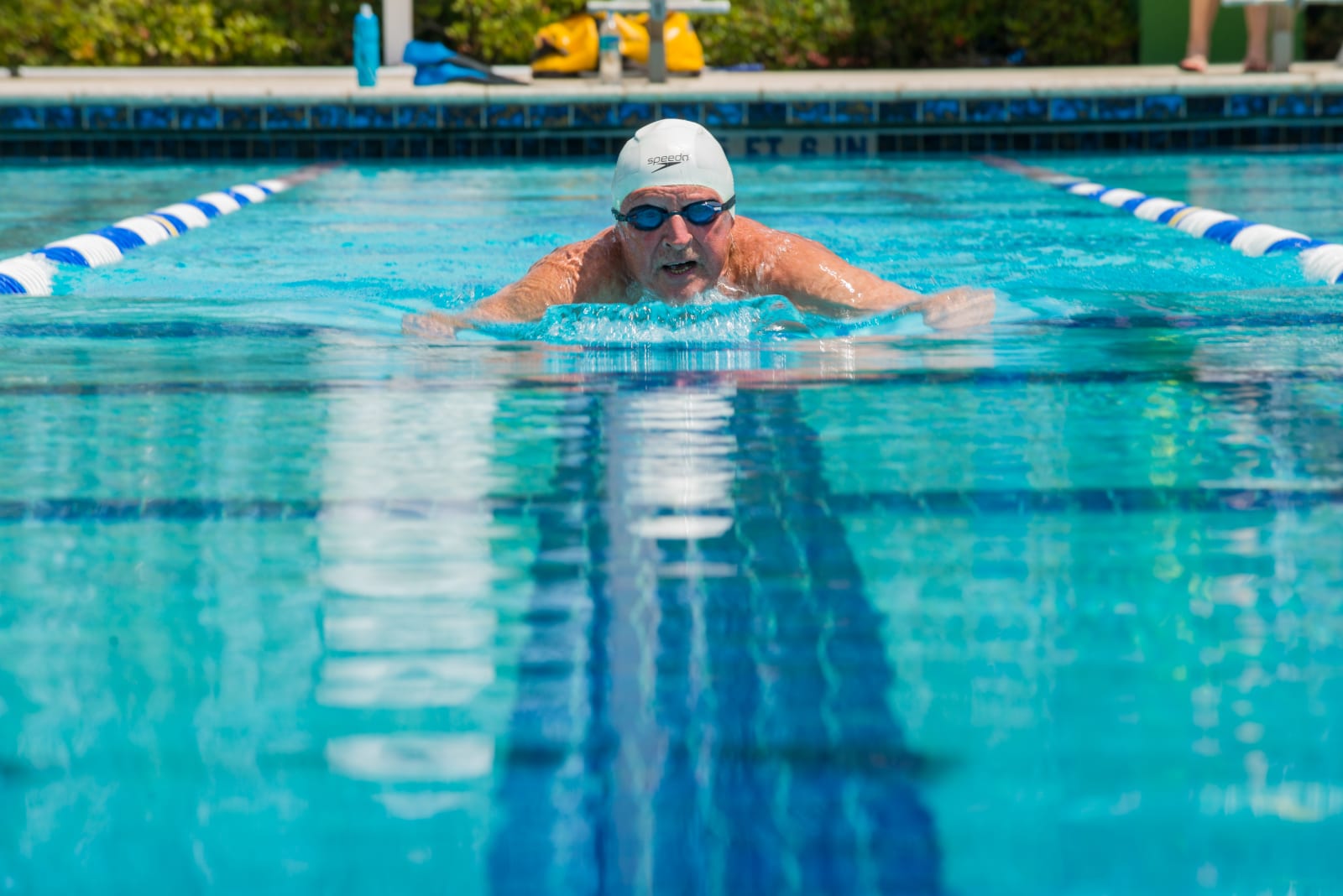
With each lap Jack Ratkovic swims in the pool, the stroke he had a few years ago fades from memory.
The retired residential developer walked down the stairs of his St. Augustine condo in August 2015 and said he felt groggy and off balance. He tried to say, 'Good morning" to his wife, Alison, who was downstairs, and his words were slurred and his face drooping. His wife knew something was wrong.
She insisted on calling 911 despite his reluctancy, and Ratkovic was rushed to Flagler Hospital and then taken by helicopter to Baptist Medical Center Jacksonville, which serves as the regional center for advanced treatment of strokes, aneurysms and other brain conditions.
Ratkovic was having an ischemic stroke, which occurs from an obstruction within a blood vessel that supplies blood to the brain.
Neurovascular surgeon Ricardo Hanel, MD, PhD, director of the Baptist Neurological Institute, used a stent retriever device and a stent to reopen Ratkovic's blood vessel. In a minimally invasive procedure, Dr. Hanel inserted a microcatheter into an artery in Ratkovic's groin and then threaded it through his body and up to his brain.
Ratkovic never let the stroke define him or slow him down despite months of speech therapy to get his words back. He stayed determined to return strength to his body and mind.
The hard work paid off. In 2017, Ratkovic, 77, placed in three swimming events at the National Senior Games, including a fifth-place finish in the 200 breaststroke. His goal is to qualify for the 2019 Nationals in both the 100 and 200 individual medley.
"I feel I'm just as good or even faster after the stroke than I was before," said Ratkovic, who has been swimming competitively for several years. "I was determined that I wanted to compete again and I wanted to be better."
Dr. Hanel said he's amazed to see Ratkovic's transformation since the stroke left him unable to express himself.
"Now he is an inspiration to others to exercise and to be healthy," Dr. Hanel said.
But unlike Ratkovic, about 80 percent of people who have a stroke don't seek care in time, which reduces their chances of recovery.
"As soon as you recognize symptoms, call 911. Don't wait to see if the symptoms will go away," said Wendy Camp, ARNP, MSN, director of the Stroke and Cerebrovascular Program at Baptist Health. "The longer you wait, the more tissue is damaged and the chances of a good recovery can be diminished."
A lifeguard in his 20s and a lifelong runner, Ratkovic started working out in the gym about 45 days after the stroke. He returned to competitive swimming about a year later. He now trains four to five days a week in St. Augustine.
"I just like competition. I'm not a couch potato?" he said. "That's just the way I am."
For more information on stroke services at Baptist and Lyerly Neurosurgery, go to lyerlyneuro.com (Se abre en una ventana nueva)


