Hues of mucus
What different colors of phlegm may mean.

The arrival of fall signals the start of respiratory illness season, a time when coughs and sneezes are as abundant as pumpkin-flavored treats. Sometimes, that tickle in your chest causes you to cough up a little more than you bargained for.
Gredymar Marin, MD, a family physician with Baptist Primary Care at Seven Pines, explained that while mucus is a normal and important part of the respiratory tract – keeping airways moist and trapping dust, allergens and germs – the lining can get irritated by a virus or bacterium.
“This inflammation activates the immune system and stimulates the airway cells to produce more mucus,” Dr. Marin said. “The mucus may also become thicker as it collects white blood cells, damaged cells and other debris. Coughing is a protective response that clears germs and debris from the airway.”
What is phlegm?
According to Dr. Marin, the junk you cough up may fall into three categories:
- Mucus is the normally clear, protective substance produced by the lining of the respiratory tract. It traps inhaled particles and helps keep the tissues moist.
- Phlegm refers to mucus from the respiratory tract that has become thicker and may contain white blood cells, damaged cells, germs and other inflammatory debris.
- Sputum is mucus or phlegm that has been coughed up from the lower respiratory tract and expelled through the mouth.
“Secretions can reach the throat in two primary ways: they may be produced in the lower airways and moved upward by cilia [small hair-like structures] and coughing, or they may drain from the nose and sinuses,” Dr. Marin said. “That drainage, known as postnasal drip, is a common cause of coughing and throat-clearing, especially in people with allergies, rhinitis [inflammation of mucus membrane in the nose] or sinus inflammation.”
What does phlegm color mean?
So, you spit the sputum in the sink and see green. Does that mean you need antibiotics? Not necessarily, cautioned Dr. Marin.
“Mucus color can provide clues, but it can’t determine the cause of an illness by itself,” she said. “A diagnosis should be based on the complete clinical picture, including the person’s symptoms, duration of illness, physical examination, risk factors and, when appropriate, testing.”
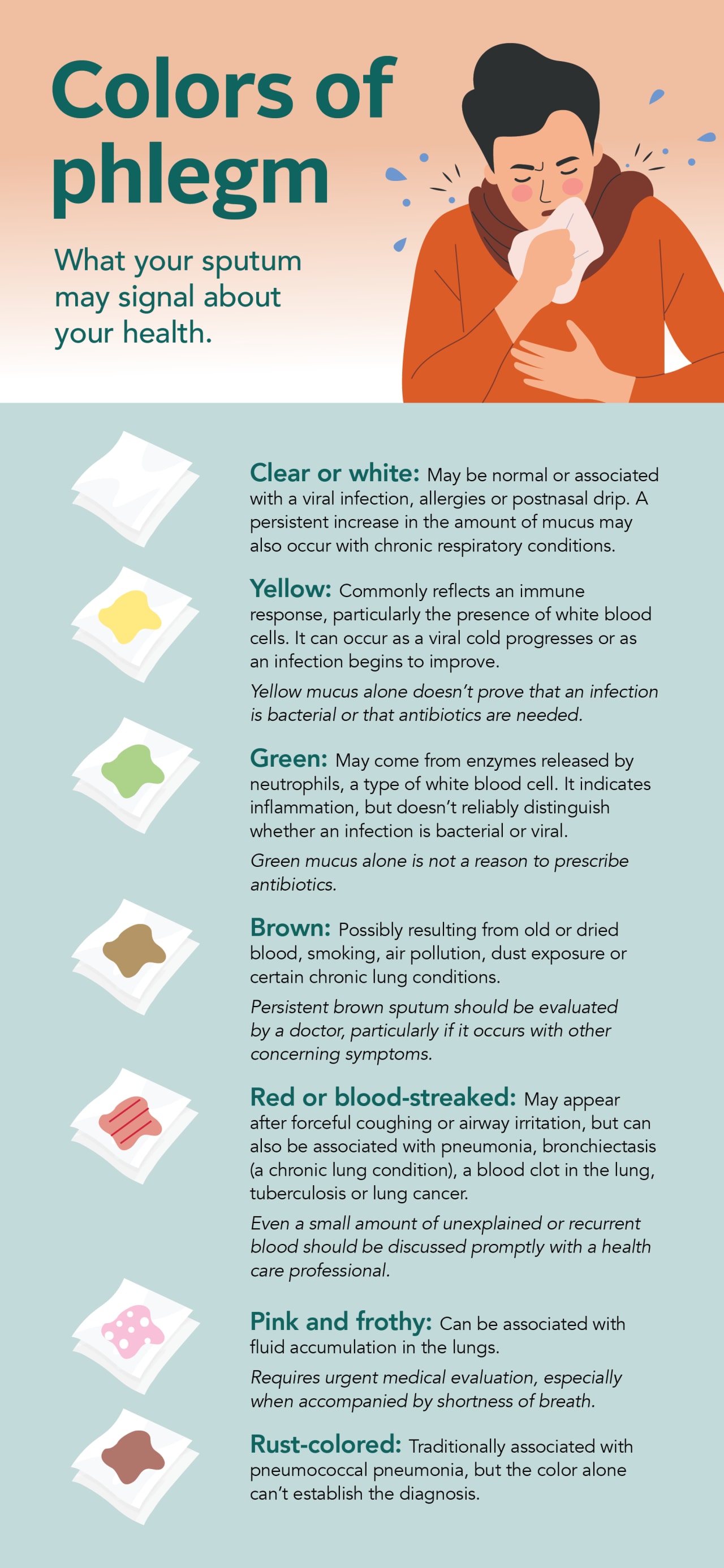
When should you see a doctor?
Dr. Marin urged people to contact their doctor for a cough accompanied by:
- Blood-streaked, red, pink or rust-colored sputum.
- Shortness of breath, chest pain, or new or worsening wheezing.
- High or persistent fever.
- Returning symptoms after initial improvement.
- Symptoms that get worse or continue for approximately three weeks.
- Hoarseness, difficulty swallowing, persistent vomiting, unintended weight loss or leg swelling.
Additionally, you should see your doctor if you:
- Are a current or former smoker with new or persistent cough.
- Have known asthma, chronic obstructive pulmonary disease (COPD), bronchiectasis or another lung condition with increased sputum, worsening breathlessness or a significant change from usual symptoms.
People experiencing difficulty breathing, blue or gray lips, confusion, fainting, severe chest pain or rapidly worsening symptoms, or those who are coughing up more than a small amount of blood, should go the Emergency Room immediately.
‘Tis the season
It’s no secret that viruses like the common cold, flu and respiratory syncytial virus (RSV) circulate more widely during the fall and winter. That’s why preventive measures, like vaccination and hand-washing, are so important.
“Most uncomplicated respiratory infections are viral and improve with time and supportive care, like fluids and over-the-counter fever reducers, so antibiotics are usually unnecessary,” Dr. Marin said. “When appropriate, testing can identify infections such as influenza and COVID-19, for which antiviral treatment may be beneficial, particularly when started early.”
Your primary care doctor can provide evaluation, treatment, vaccines and preventive guidance throughout sick season and the entire year. Looking for a new provider? Use the Find a Doctor tool or schedule an appointment online.


