Regaining her independence
New procedure gives stroke patient use of her hand again.
Article Author: Deborah Circelli
Article Date:
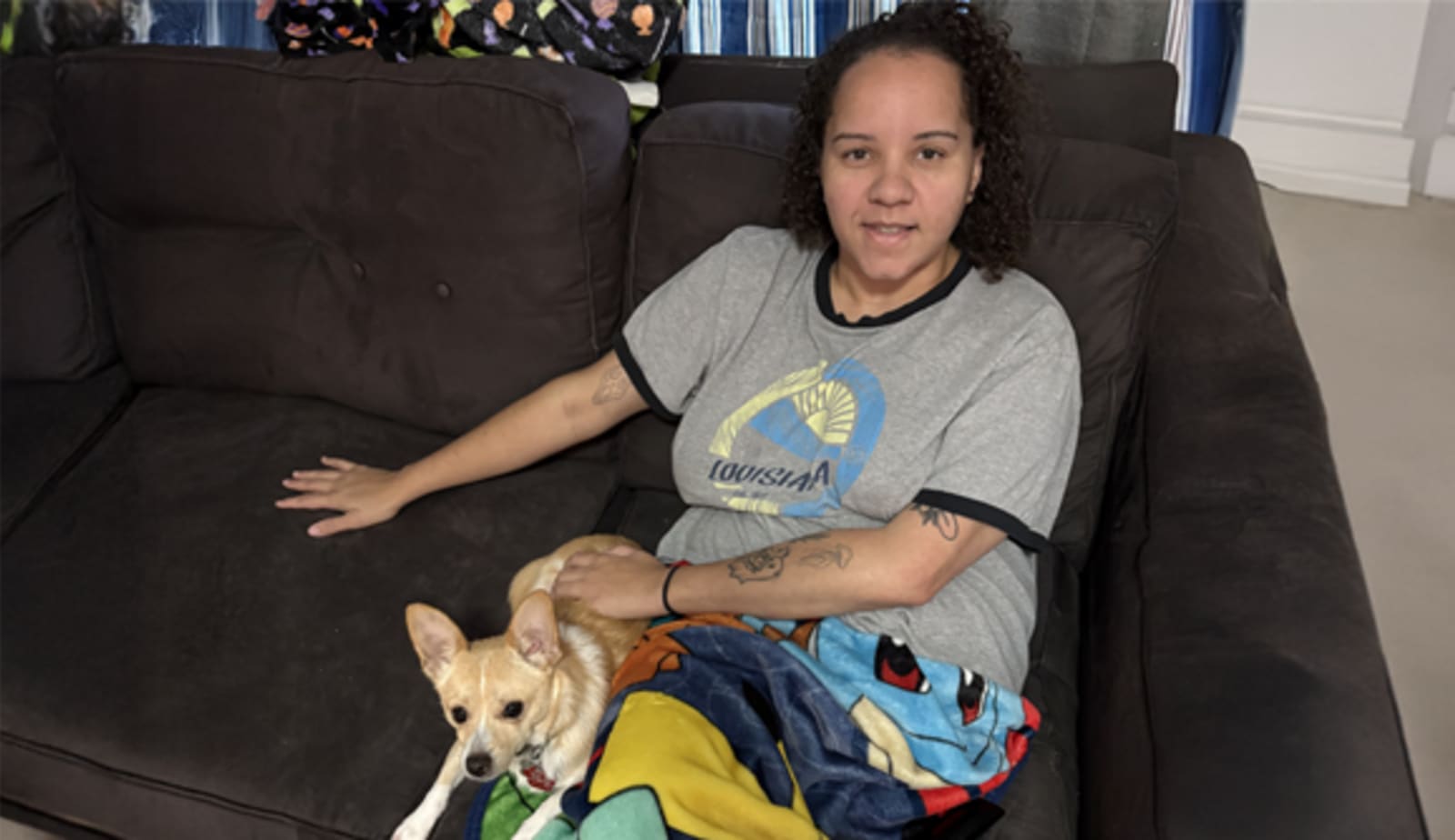
When a stroke at just 28 years old took away Jessalyn Paul’s use of her left hand, she never thought she’d be able to help her young son or herself in the same way again.
Dressing became difficult. Opening jars, water bottles, cabinets and doors was challenging. Routine tasks like washing her hair, grocery shopping, changing diapers and even petting her dog were hard to do.
Her hand stayed clutched in a fist for three years until a new innovative outpatient procedure at Baptist Medical Center Jacksonville changed her life.
Now, after the procedure in March paired with special rehabilitative therapy, she’s able to open her fist more and help her 5-year-old son and her husband. She can also pet and pick up her chihuahua, Yoda.
“I was willing to give it a try,” she said. “Now I can open my hand a lot more and move all my fingers. My family is surprised how much more I can do. It’s easier to carry groceries and I can push the cart around while grocery shopping.”
Combining nerve stimulation with therapy
For many stroke survivors, leaving the hospital is only the beginning of recovery. Weakness and loss of movement can persist for months or years, making everyday tasks difficult. Baptist Health is expanding the options available to patients throughout that recovery journey, including by providing a newer treatment that pairs an outpatient procedure with rehabilitation therapy.
The minimally invasive vagus nerve stimulation (VNS) procedure involves implanting a small medical device, no bigger than the palm of a hand, into a patient’s chest. A wire connects the device to the vagus nerve in the neck, which carries signals between the brain and body. The FDA-approved Vivistim® Paired VNS™ System delivers gentle, repeated stimulation to help support recovery. During sessions, a therapist signals the implant to deliver pulses to the vagus nerve while the patient performs a specific task, such as putting on a hat, brushing hair or cutting food.
The device can also be activated by the patient with a magnet swipe while practicing rehabilitation exercises or performing routine tasks at home.
When delivered alongside physical and occupational therapy, the nerve stimulation boosts the brain’s ability to relearn movement by strengthening existing neural pathways and creating new ones that bypass areas damaged by the stroke. The treatment is for people who have experienced moderate to severe upper extremity impairment for at least six months following an ischemic stroke.
“This is a first-of-its-kind treatment that can offer substantial benefits to people following a stroke to improve their recovery,” said neurosurgeon Eric Sauvageau, MD, co-medical director of the Baptist Stroke & Cerebrovascular Center. “We’ve seen patients who had a stroke five, seven or even 10 years ago who have experienced dramatic improvement from this procedure and treatment.”
And the benefits, he said, continue long-term.
Rough start to a new year
Paul’s life changed on her birthday in 2023. While she was getting out of bed in the early morning hours to go into the bathroom, she kept falling as she tried to walk. She also felt a terrible pain in her head, like a bad migraine.
Neurointerventionalist Nima Amin Aghaebrahim, MD, system medical director for Stroke for Baptist Health, said Paul had a major ischemic stroke cause by a blocked artery on the right side of her brain. He performed emergency procedures to restore blood flow.
“Her care brought together emergency treatment, intensive and inpatient care, rehabilitation, and clinic and outpatient care,” he said. “Together, these efforts helped limit the damage to her brain. Her story reminds us that stroke can happen to anyone at any age, and can leave lasting challenges and disability. We have made major advances in removing blood clots fast in patients with stroke and preventing another from occurring. Helping people regain strength, movement and independence remains just as important. That's where rehab and recovery comes into play and the future of those fields is promising.”
After leaving Baptist Jacksonville, Paul went to Brooks Rehabilitation, where she learned to talk, walk, and use her hand and arm again.
Earlier this year, she learned about the vagus nerve stimulation treatment. She was excited to possibly get any movement back and now encourages others she meets. She’s able to activate the device throughout the day when performing various tasks and has seen improvement even without it activated.
“I tell people to take the chance. It definitely helped me,” she said.
Dr. Nima said Vivistim is an example of how advancing technology can help patients regain independence
“At Baptist, we bring this comprehensive care together to support patients throughout their recovery from stroke,” Dr. Nima said.
From stroke to strikes
Paul, an avid bowler, is hitting the lanes again now that she can support the ball better with her left hand. She also started swimming in the summer through Brooks’ Adaptive Sports and Recreation Program.
She hopes to get back to work.
“Now that my other hand is working better, maybe I’ll have a better chance,” she said.
Learn more about the vagus nerve stimulation treatment. For information about the Baptist Stroke & Cerebrovascular Center and services provided, visit BaptistJax.com/Stroke.


